
Checking Criminal History in Cobb County
Cobb County uses separate systems for misdemeanor, felony, booking, and statewide history records. Start with the kind of event being checked. The free Cobb State Court Records Search covers criminal misdemeanor and traffic matters in that court, while the Superior Court Clerk maintains felony files. The Sheriff inmate search addresses current or recent county custody. Georgia Felon Search has a narrower statewide purpose: possible Georgia felony-conviction matches.
Gather the full name, birth year or date of birth when a system permits it, likely filing date, and any case, citation, police, warrant, or booking number. Common names need more than a visual match. A Cobb County criminal record check becomes stronger when the court name, case number, charge, and disposition all point to the same person and event.
- Choose State Court for misdemeanors and traffic cases, Superior Court for felonies, or the Sheriff for custody and booking.
- Enter the narrowest reliable identifiers and add a filing-date range when a common surname returns too many results.
- Compare the court, case number, birth year, filing date, and charge rather than relying on a name alone.
- Read the underlying docket or request the booking or incident record from the office that created it.
- Order a certified disposition or use fingerprint-based GCIC review when identity or formal proof matters.
Cobb County State Court Search Fields
The official Cobb State Court Records Search begins with a choice between civil and criminal cases. Its 2024 guide says the public result set is capped at 5,000 records, so broad surname searches can be incomplete. Phonetic matching can help with uncertain spelling, but it may also widen the list. CAPTCHA prevents automated bulk searching.
| Search field | Best use | Important limit |
|---|---|---|
| Last and first name | Basic party search, with phonetic option | Common names need more filters |
| Case number | Direct lookup using the shown YY-A-NNNNN pattern | Exact identifier is strongest |
| Birth year | Separates people with similar names | It is not a full date of birth |
| File date range | Narrows a long result list | A wrong range can hide the case |
| Citation or tag | Special school-bus citation searches | Not a general traffic-ticket field |
The official Cobb County courts hub provides the starting links for the county's separate court offices.
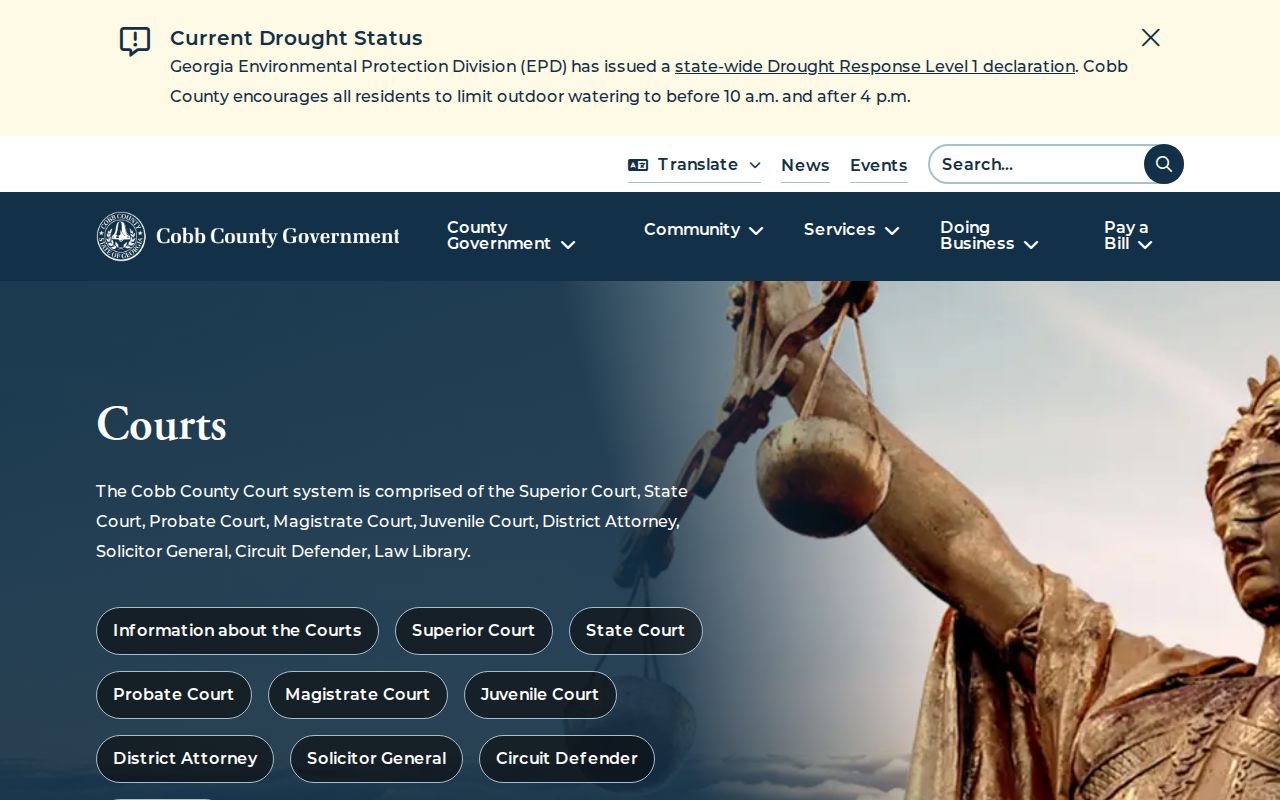
The hub is useful for routing, while the State Court search itself supplies the detailed criminal query fields.
Georgia Official Background Checks
The Georgia Bureau of Investigation operates the Georgia Crime Information Center, the central criminal-history repository. Georgia Felon Search is a name-based public product. It asks for first name, last name, date of birth, and sex, then returns possible Georgia felony-conviction matches. It does not cover misdemeanors, juvenile history, restricted information, or pending arrests.
A name result is not fingerprint-confirmed. Someone reviewing their own fuller Georgia record can use a participating law-enforcement agency or Georgia Applicant Processing Service through IdentoGO when an authorized service code applies. GCIC also offers appointment-only personal record inspection and fingerprinting in Decatur. Fingerprints are the sound route when a same-name match must be resolved.
| Georgia Felon Search | $15 for the search, plus $15 for each possible record selected; no-result searches are still charged. |
|---|---|
| County court searches | Online State Court and Superior Court index searching is free; certified copies may carry clerk fees. |
| Open records work | Copying and reasonable staff search, retrieval, and redaction time may be charged; the first quarter-hour is generally free. |
| Record restriction | An arresting agency or prosecutor may charge up to $50; the exact current GCIC processing amount was not confirmed. |
The GAPS registration portal shows the official fingerprint appointment route used with an agency or service code.

Registration and print-site selection happen there, but the correct service code must come from the authorized requesting program.
Cobb County Records Span Two Campuses
Cobb County’s judicial center is in downtown Marietta, but its detention operation is on County Services Parkway. That physical split mirrors the records split. The Superior Court Clerk at 32 Waddell Street maintains felony pleadings, judgments, and certified criminal documents. State Court handles misdemeanors and traffic cases through a separate clerk and search system. The Adult Detention Center at 1825 County Services Parkway produces booking, custody, bond, and release records.
Superior Court Clerk
32 Waddell Street, Marietta, GA 30090
770-528-1300
Felony files and certified judgments
State Court Clerk
Marietta, Georgia
770-528-2660
Misdemeanor and traffic case records
Adult Detention Center
1825 County Services Parkway, Marietta, GA 30008
Booking, bond, custody, and release records
The county government building at 100 Cherokee Street can route general questions, but it is not the custodian of every record. Sending a request directly to the Sheriff, police department, court clerk, or municipal court avoids needless delay.
The official Cobb County government gateway illustrates that broader routing role.
Use its agency directory to find the actual custodian instead of assuming the central county office holds every file.
Criminal Record Types
Cobb County criminal records are products of different stages in the justice process. The officer’s report describes the incident and arrest basis. The Sheriff documents jail intake. A prosecutor chooses filed charges, and a court clerk records motions, hearings, pleas, disposition, and sentence. GCIC links reported arrest cycles with reported Georgia outcomes.
Because these products update on different schedules, one source may show an event before another does. The absence of a court case shortly after an arrest can reflect charging delay. The absence of a current inmate hit can reflect release or transfer, not proof that no booking occurred.
- Incident and arrest reports come from Cobb Police, the Sheriff, a city department, or another arresting agency.
- Booking and custody records are created by the Cobb County Sheriff at the Adult Detention Center.
- Criminal case files belong to State, Superior, Magistrate, or the relevant municipal court.
- State criminal history is maintained by GBI and GCIC from fingerprints and agency disposition reports.
- Corrections and registry entries come from GDC, supervision agencies, GBI, and local registration officials.
Cobb County Booking Data and GCIC
A custodial arrest can create several records within hours. The arresting agency supplies the narrative and alleged offenses. At the Cobb County Adult Detention Center, the Sheriff records identifying information, fingerprints, a photograph, intake charges, bond terms, and custody status. A Magistrate may add warrant and first-appearance information before a numbered State or Superior Court prosecution exists.
Record flow: Arresting agency › Cobb County Sheriff booking › prosecutor and court › Georgia Crime Information Center
That path explains why a jail charge may not match a later accusation or indictment. Prosecutors can decline, amend, add, or replace counts. The judgment is the best source for the final outcome, while the Sheriff remains the source for release and custody history. The Cobb County arrest lookup lays out each recent-arrest route without treating a booking as guilt.
The county's official court information page maps the jurisdictions that receive those cases.
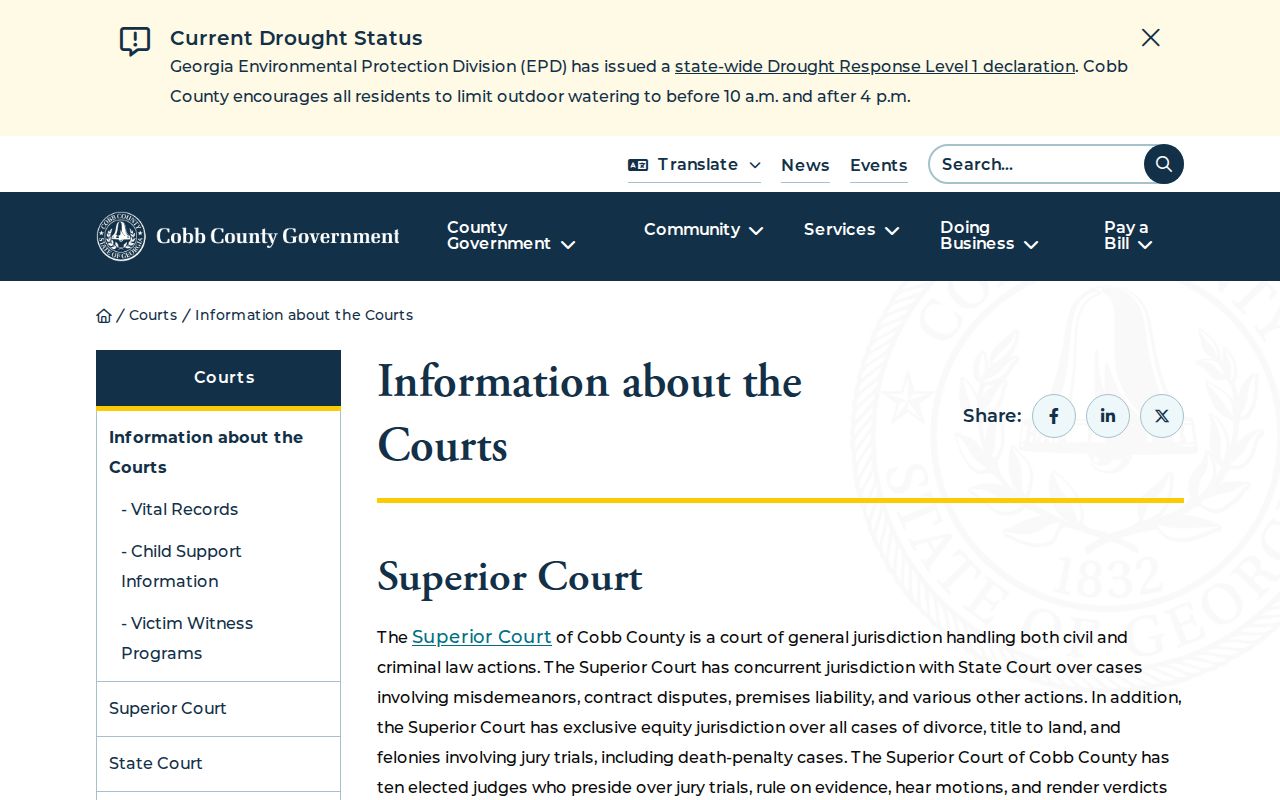
Its office listings help separate a booking question from a filed misdemeanor or felony case.
Inside a Cobb County Criminal Record
The contents depend on the source. A GCIC history can connect identity data, arrest cycles, charges, and reported dispositions. A court index emphasizes the case number, filing, parties, counts, events, status, and financial entries. A Sheriff profile focuses on booking and custody. Read the label and agency before drawing any conclusion from a field.
| Name & Identifiers | Displayed name, aliases where authorized, birth year or date, sex, and agency or case identifiers. |
|---|---|
| Arrest / Booking Data | Arrest and booking dates, arresting agency, booking number, intake charges, bond, and facility status. |
| Charges & Statutes | Alleged or filed offense descriptions, count numbers, felony or misdemeanor markers, and statute citations when shown. |
| Disposition | Dismissal, plea, verdict, acquittal, or other final action as recorded by the court and reported onward. |
| Sentence | Confinement, probation, fines, conditions, and credit, best confirmed from the signed judgment. |
| Custody / Supervision Status | Current jail or prison placement and public release or supervision fields, subject to fast change. |
Reading Cobb County Case Outcomes
A docket status is not always a disposition. “Closed,” “inactive,” or “disposed” describes case administration but may not say whether a count was dismissed, pleaded, tried, or otherwise resolved. Likewise, a sentence event should be checked against the signed judgment. A zero financial balance does not establish dismissal or acquittal because balances can reflect fines, surcharges, probation fees, payments, and adjustments.
- Accusation or indictment
- The prosecutor’s filed charging document, which may differ from the jail’s intake charge.
- Disposition
- The recorded outcome of a charge or case, such as dismissal, plea, verdict, or acquittal.
- Certified copy
- A clerk-authenticated court record used when the outcome must be formally proved.
- Record restriction
- Georgia’s process for limiting eligible criminal-history dissemination; it does not declare that the event never happened.
For proof, request the final disposition or judgment using the exact court and case number. Felony copies come through the Superior Court Clerk. State Court supplies misdemeanor and traffic case records, while a city municipal clerk certifies its own municipal outcome.
The Georgia Crime Information Center overview explains the state repository's role after local agencies report an arrest and outcome.
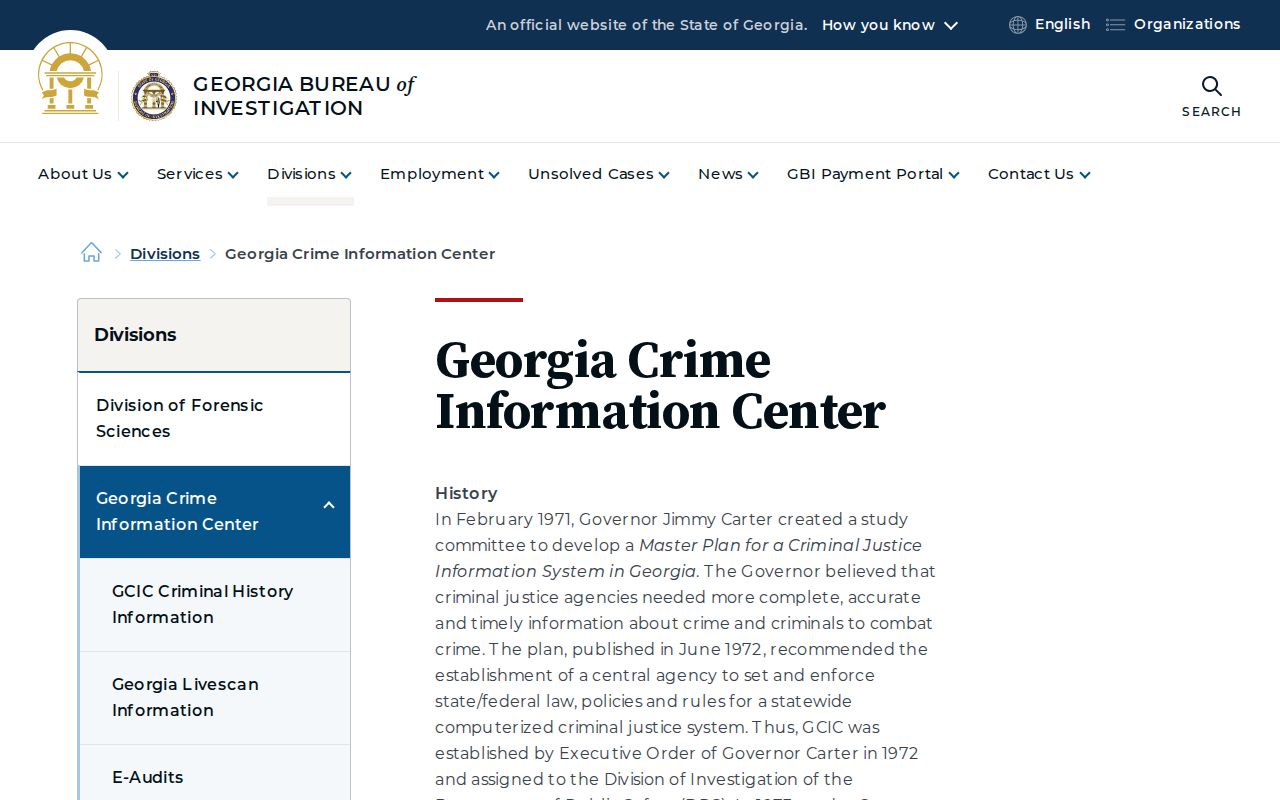
GCIC history is a state reporting product, so it should not be confused with the richer document trail in a Cobb court file.
Public Access Laws in Georgia
The Georgia Open Records Act generally favors access to existing public records, but it does not require an office to create a custom history, report, or summary. Cobb County agencies may redact or withhold protected material, including active-investigation information, juvenile records, medical details, victim identifiers, and security-sensitive jail information. Court access and GCIC dissemination also follow their own statutes and court rules.
Key Statutes:
O.C.G.A. §50-18-71 - Sets production, response, inspection, and reasonable-cost rules for existing public records.
O.C.G.A. §50-18-72 - Lists exemptions that can support withholding or redaction.
O.C.G.A. §35-3-35 - Governs GCIC criminal-history collection and dissemination.
O.C.G.A. §35-3-37 - Provides Georgia record-restriction and correction procedures.
O.C.G.A. §42-1-12 - Establishes sex-offender registration and public information duties.
Cobb County Open Records Routing
The county’s Open Records Center supports electronic submission, tracking, archived requests, and file delivery. The County Attorney’s page also cautions that separate custodians hold Sheriff, Police, court, 911, and other department records. Choose the creator of the requested document before submitting.
A focused request identifies the incident or case number, approximate date and location, named subject, creating agency, and exact existing item. Ask for the initial incident report, booking sheet, bond entry, release record, or custody history rather than asking staff to compile a new “criminal history.” Request electronic production and a cost estimate when retrieval or redaction may be extensive.
Under the Act, an agency generally responds within three business days by producing available records or stating when they will be ready and estimating cost. That response window is not a guarantee that a large production finishes in three days. For urgent custody information, use the official Sheriff search or detention contact instead of waiting for a records request.
The image below comes from the official Cobb County Open Records Center gateway and shows the agency’s request-routing context.
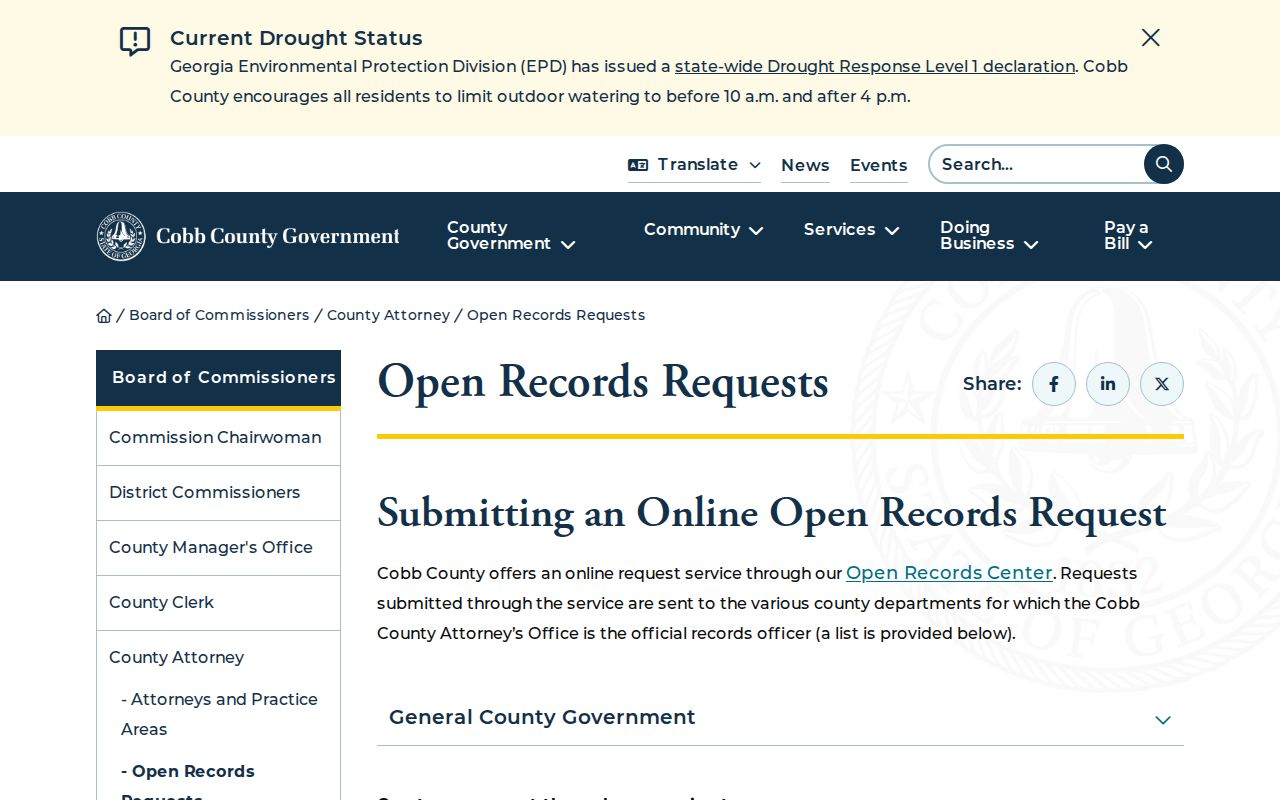
Portal labels and assigned custodians can change, so save the confirmation and verify that the request reached the office that owns the record.
Sealed, Expunged, and Restricted Records
Georgia generally calls its relief process “record restriction” under O.C.G.A. §35-3-37. Restriction limits eligible arrest information in ordinary public GCIC dissemination, while court sealing is a related but distinct step. Juvenile matters, sealed files, successful First Offender treatment, and other protected records may be absent from public searches even though authorized agencies retain access permitted by law.
The path depends on arrest date. For an arrest before July 1, 2013, the applicant begins with the arresting agency, which routes the form to the prosecutor. For a later arrest, the prosecutor is the starting office. A denial can be appealed to Superior Court within 30 days. GCIC estimates two to three weeks for a complete application after it reaches the state, but court and local review time comes first.
GBI's criminal-history FAQ describes personal inspection, correction, and the limits of public record products.
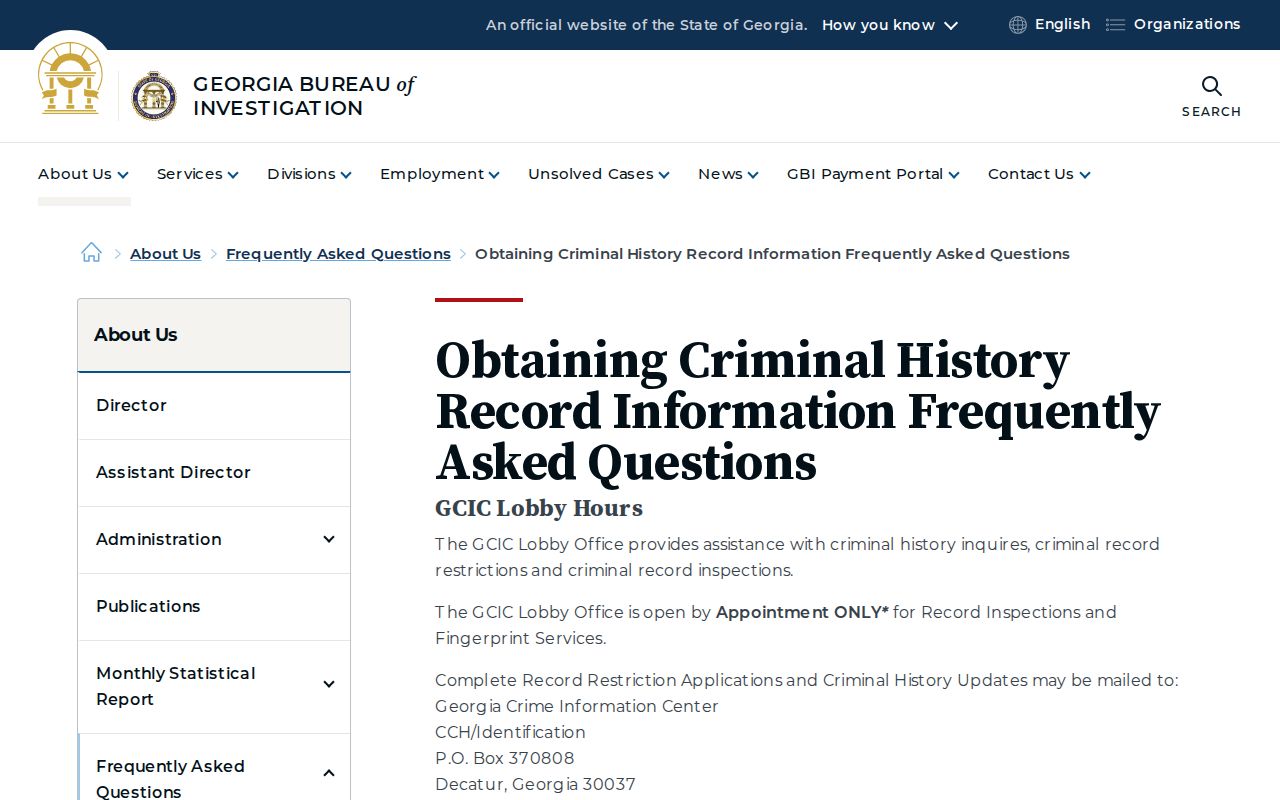
That guidance is the state-level reference when a local disposition is missing from a GCIC history.
Cobb County Warrants and Supervision Records
No verified comprehensive public Cobb County active-warrant name database was found in the official sources. A person resolving their own possible warrant should confirm status through the issuing court, the Sheriff, or counsel before appearing. Magistrate Court issues many arrest warrants and handles first appearances. Municipal courts may hold failure-to-appear or bench warrants tied to city cases, while an associated State or Superior Court docket can supply later case activity.
Probation and parole records also require source matching. Georgia community supervision is state-run through the Department of Community Supervision, and parole authority rests with the State Board of Pardons and Paroles. A Cobb County judgment can show a probation sentence or revocation event, but detailed officer assignments and supervision files are not ordinary public profiles. The GDC Find an Offender system addresses state correctional custody, not current county jail detention.
The GDC Find an Offender gateway is the official next step after a sentenced person transfers into state custody.
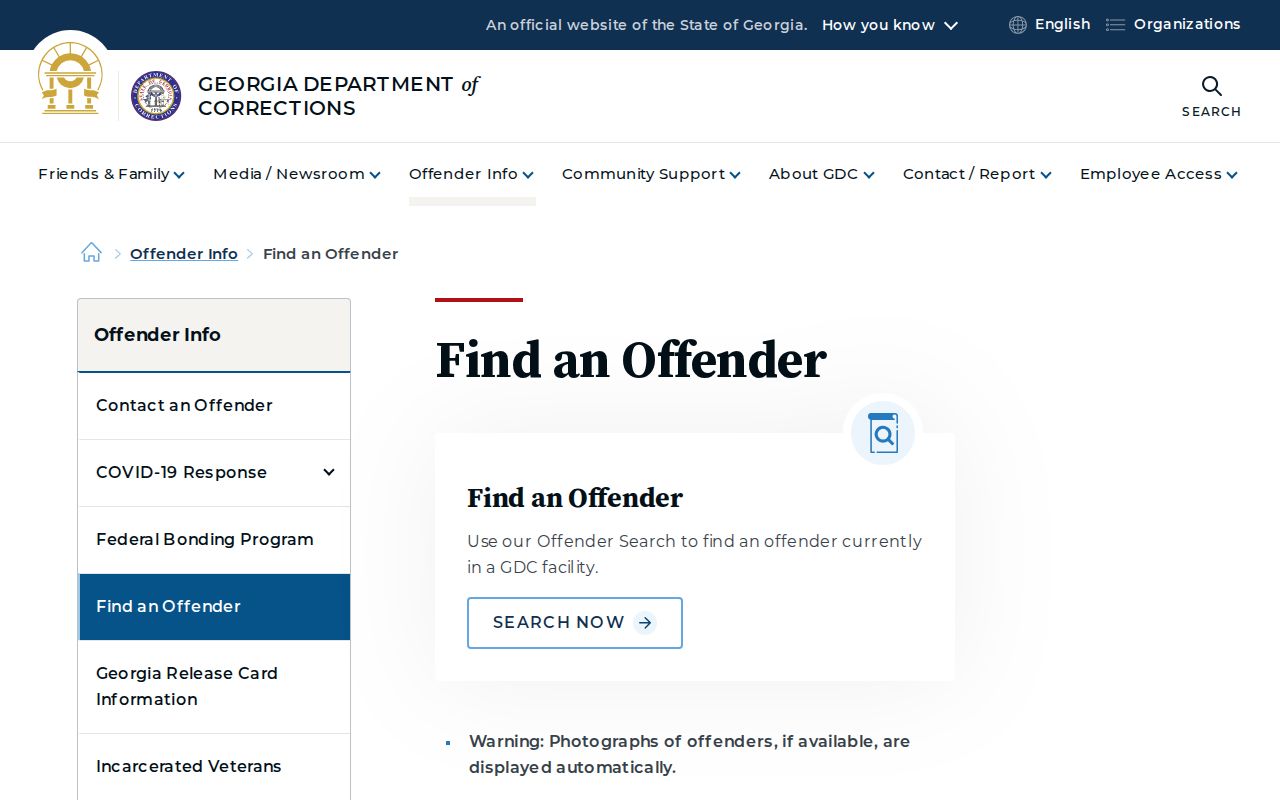
Its results do not replace the Cobb Sheriff search for county pretrial or short-term custody.
Cobb County Criminal Records by City
Marietta, Smyrna, and Kennesaw maintain their own police and municipal court records even though custodial bookings commonly converge at the Cobb County jail. Marietta adds a detailed municipal copy and retention process. Smyrna routes disposition requests through JustFOIA. Kennesaw searches require careful confirmation that the event occurred within city police jurisdiction rather than unincorporated Cobb County.
Marietta Criminal Records
About 63,000 · City police and municipal records are distinct from county offices with Marietta addresses.
Smyrna Criminal Records
About 57,000 · Municipal dispositions use JustFOIA, with certified originals mailed or picked up.
Kennesaw Criminal Records
37,970 · City reports, municipal citations, county bookings, and felony files follow separate routes.
Cobb County Agency Boundaries Matter
A Marietta mailing address does not prove that Marietta Police handled an event. Unincorporated areas can use Marietta postal addresses while remaining under Cobb Police jurisdiction. Smyrna, Kennesaw, Acworth, Powder Springs, Austell, campus departments, Georgia State Patrol, and other agencies may also create an arrest report that later connects to the same county jail and courts.
Check the badge, citation, incident number, or agency name before requesting a narrative report. The Sheriff booking identifies custody but does not always identify which records unit owns every investigative attachment. City ordinance and traffic cases can remain in municipal court; state-law misdemeanors generally route to Cobb State Court, and felonies route to Superior Court.
This boundary test prevents two common errors: asking Cobb Police for a city report and treating a municipal “no record” response as proof that no county prosecution exists. Follow the charge and court, not just the postal city.